How $200M–$2B Family Offices Can Fix Spreadsheet Risk in 90 Days
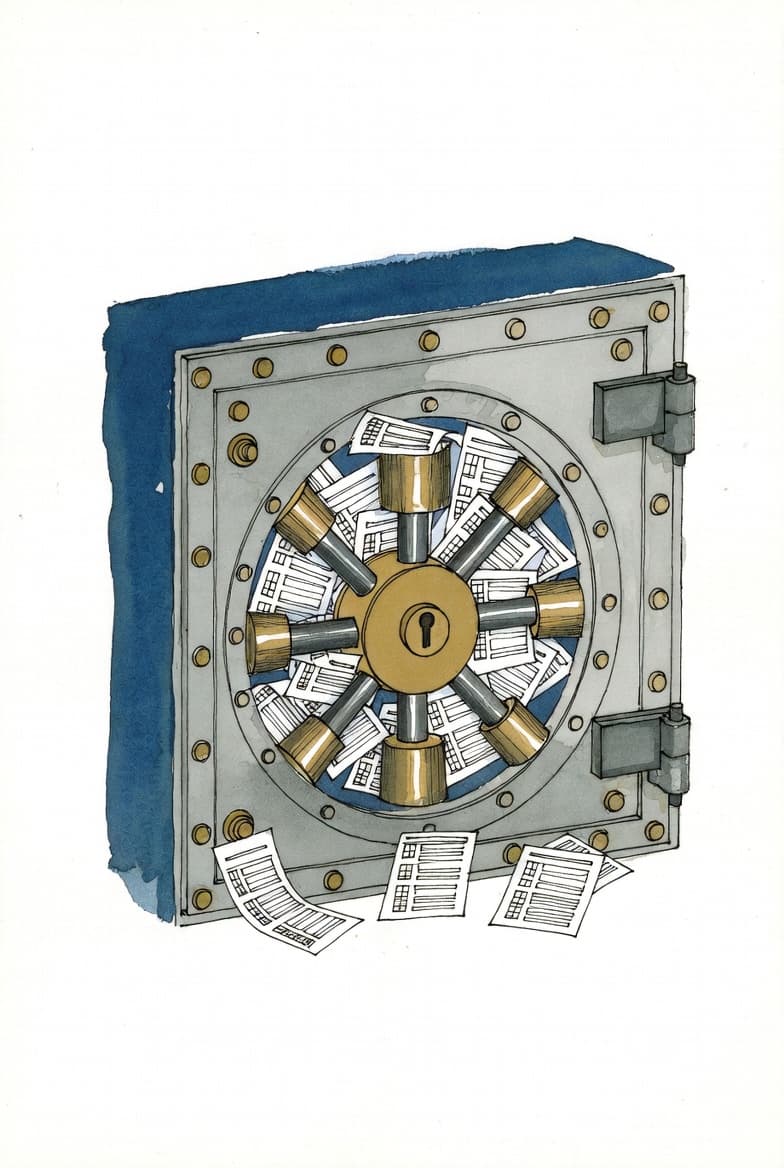
Family offices are rapidly rolling out technology and AI strategies, yet core consolidation still largely runs on spreadsheets, creating a dangerous gap between front‑end sophistication and back‑end fragility.
Many principals, CIOs, and CFOs equate AI pilots, client portals, and sleek dashboards with "fixing" data risk, but the underlying entity structures, data definitions, and version control often remain spreadsheet‑bound. In practice, that means a $500M–$2B office can show institutional‑grade reporting on the surface while core numbers still depend on a web of Excel files that no one person fully trusts or understands. deloitte
For a $500M+ family office, this gap is not a cosmetic problem; it is an operational, governance, and reputational risk. Deloitte's global survey of 354 single‑family offices finds that about 70% say they are underinvested or only moderately invested in operational technology, and 17% already see inadequate tech investment as a core risk, even as 43% are developing or rolling out technology strategies. At the same time, Citi reports that only 43% of family offices use specialist software for consolidated reporting—implying roughly 57% still rely on Excel or non‑specialist tools for core consolidation—and Campden shows that more than 80% are satisfied with their data access even though around 40% remain concerned about spreadsheet reliance and 38% about manual aggregation. In North America, automated reporting adoption has jumped to roughly 69% from 46% in a single year, but from a very manual baseline, and nearly half of offices expect a generational wealth transition within the next decade. The stakes are clear: if strategy focuses on AI, dashboards, and "insights" without first hardening the data spine, offices risk scaling unreliable numbers and handing successors a black box at precisely the moment scrutiny is highest. privatebank.citibank
Most family offices still treat this as an IT or reporting preference issue—something for the controller and vendor shortlist to handle quietly in the background. The offices that are pulling ahead treat it as a strategic question: "Is our data infrastructure succession‑ready?" Instead of asking whether they have the latest tools, they ask whether an incoming principal or next‑gen CIO could audit and rely on the numbers on day one. The rest of this article will unpack how we got to this "good enough" spreadsheet trap, what it costs, and what leading offices are doing differently.
The Problem Landscape: Modern Skin, Legacy Bones
A large share of $500M–$2B family offices still run core consolidation and reporting from spreadsheets, even when they have invested in more sophisticated front‑end tools. Citi's Global Family Office Survey of 268 family offices found that only 43% use specialist reporting software, implying roughly 57% remain reliant on Excel or generic tools for consolidated reporting. Campden's Family Office Operational Excellence Report 2024 shows that, in a global sample of predominantly single‑family offices (average AUM roughly US$1.4B), more than 80% say they are satisfied with their ability to access data for decisions, yet about 40% expressly worry about reliance on spreadsheets and 38% about manual aggregation—an explicit acknowledgment that the plumbing is fragile even when the water appears to flow. campdenwealth
North American offices, which are closest to the $500M–$2B band and the US focus, are rapidly modernizing but from a very manual starting point. The North America Family Office Report 2025 notes that adoption of automated reporting tools has increased sharply, rising to around 69% from 46% in the prior year, and that nearly half of family offices expect a generational wealth transition within the next decade. Yet earlier Campden research shows that only about half of North American family offices have any succession plan at all and, of those, only 48% are formally written, with a significant minority relying on informal or verbal arrangements. This combination—rising transition pressure alongside historically informal planning—amplifies the risk when the underlying numbers are inconsistent, undocumented, or difficult to reconcile. rbcwealthmanagement
Succession planning and governance structures remain uneven across regions and office types, and this interacts directly with data risk. In a North America–Europe–Asia‑Pacific comparison, Campden found that just 47% of North American offices had a succession plan, versus 52% in Europe and 70% in Asia‑Pacific, and even in the better‑prepared regions, a large share of these plans were not fully formalized. UBS's 2024 Global Family Office commentary reinforces the picture: under half of family offices globally have a succession plan, and only 44% have a documented investment process, despite an estimated US$1.2 trillion expected to pass to the next generation within 20 years. For both single‑family offices and multi‑family offices, this means leadership changes will often occur in organizations whose core numbers and decision rules are still stored in opaque spreadsheets rather than in an auditable data and governance framework. rbccm
Technology underinvestment is a key structural driver of this landscape. Deloitte's global Family Office Insights survey found that nearly one in five single‑family offices see inadequate investment in technology as a core risk, and around 70% say they are underinvested or only moderately invested in operational technology—despite average AUM of roughly US$2B and lean teams of around 15 staff. While 43% are developing or rolling out technology strategies and 65% are prioritizing security and risk management in those strategies, the starting point is still a world where spreadsheets sit at the center of critical processes and data governance is immature. For US‑centric offices in the $500M–$2B range, the result is a structurally "good enough" environment: reports get produced, but the reliability and auditability of the underlying numbers are not succession‑ready. technode
What Unreliable Numbers Really Cost
The costs of the spreadsheet trap show up in three dimensions: financial, operational, and governance.
Financially, many errors never appear as a neat "spreadsheet loss" line item, but their shadow is visible in efficiency gains when offices move to purpose‑built platforms. In a 2025 case study of a multi‑family office, implementing an integrated platform cut manual transaction processing by 27%, automated a further 30% of transactions via imports, reduced staff time spent managing alternative investments by roughly 75%, and compressed report generation from days to minutes. Those improvements represent hours of high‑cost talent previously devoted to reconciling and re‑keying data from multiple Excel models. Across a $500M–$2B office with a lean team, that is effectively one to two full‑time roles worth of capacity recovered for higher‑value activities such as direct deals, risk management, or next‑gen engagement. copiawealthstudios
Operationally, manual spreadsheet‑driven processes slow decision‑making and create bottlenecks in precisely the areas where agility should be a competitive advantage. Deloitte notes that family offices with around US$2B in AUM typically operate with about 15 staff and that nearly 70% see themselves as underinvested in operational technology, implying heavy manual workloads per FTE. Campden's operational research explicitly links manual aggregation and spreadsheet reliance to delayed decisions, with around 38% of respondents flagging manual aggregation as a concern even while expressing high satisfaction with data access. RBC and Campden highlight that North American offices are now adopting automated reporting precisely because it "enhances efficiency, insights, and the speed of decision‑making," suggesting that the prior state was materially slower and more fragile. finance.yahoo
From a governance and strategic perspective, unreliable numbers and fragmented data directly influence boards' ability to discharge their duties and principals' willingness to delegate. Deloitte reports that 17% of family offices now identify inadequate tech investment as a "core family office risk," and around 70% admit underinvestment in operational technology; 65% of those investing in tech focus on security and risk management, underscoring that this is increasingly viewed as a strategic risk area. At the same time, only about half of family offices have a succession plan, and a substantial proportion of those plans are informal; 27% of offices and 33% of families in North America say they are unprepared for succession, and 51% believe next‑gen family members are not qualified enough to take over. Campden and AlTi's more recent operational excellence work shows that over one‑third of offices still lack a formal family charter or documented transition plan, and UBS reports that only 44% have a documented investment process. Put plainly, many boards and principals are trying to manage impending generational transitions with governance frameworks and data infrastructures that would not pass muster in a mid‑market corporate environment. linkedin
In this context, unreliable numbers are not merely an operational nuisance. They shape whether a board can interrogate risk exposures confidently, whether an incoming CIO trusts the performance history, whether a successor feels safe making large capital allocation decisions, and whether disagreements can be resolved with a shared factual baseline rather than competing spreadsheets.
How We Got Here: Root Causes Behind the Spreadsheet Trap
Several structural and cultural factors explain why Unreliable Numbers and Hidden Operational Risk persist even in sophisticated US family offices. Historically, many single‑family offices grew out of an operating business or a founder's personal finance structure, where a trusted controller or CFO "just knew" how things fit together. Documenting that knowledge and building institutional systems lagged behind asset growth. Multi‑family offices, meanwhile, often scaled quickly in response to client demand, layering client‑specific Excel models and workarounds on top of custodial data without a unified data architecture designed for longevity and succession. privatebank.citibank
Technology investment patterns have reinforced these habits. Budgets have prioritized front‑office capabilities—access to alternatives, co‑investment platforms, tax optimization, and portfolio analytics—over what many perceive as back‑office plumbing: entity masters, consolidated data warehouses, and workflow engines. Deloitte's research shows that around 70% of family offices say they are underinvested or only moderately invested in operational technology and nearly one in five explicitly call inadequate tech investment a core risk. Citi's finding that 57% of family offices still rely on non‑specialist tools for consolidated reporting, combined with Campden's observation of widespread concern about spreadsheet reliance and manual aggregation, underscores how this underinvestment manifests in daily practice. deloitte
Fragmented advisors and multi‑jurisdictional complexity also keep unreliable numbers alive. Families often maintain separate relationships with tax advisors, trust and estate lawyers, private equity and venture managers, and philanthropy advisors, each maintaining their own data slices with limited integration. Cross‑border holding companies, trust structures, and co‑investment vehicles add layers of complexity that are often captured first and best in bespoke Excel models. Without a strong "central brain" for entity and data management, each new deal or structure adds another partially documented spreadsheet that must be reconciled at reporting time. For successors and new executives, this translates into a patchwork of files where no single version is authoritative. ubs
Cultural and relational dynamics round out the picture. Surveys highlight that a sizeable minority of families and offices feel unprepared for succession and doubt next‑gen readiness; 27% of offices and 33% of families in North America say they are not ready, and 51% believe next‑gen are not qualified. In these environments, there is often reluctance to fully document decision processes or open the "engine room" of the family office, both to preserve founder control and to avoid surfacing internal disagreements. Over one‑third of offices lacking a family charter or documented transition plan, despite growing emphasis on governance, suggests that governance work often trails intent. The result is a reinforcing loop: weak governance makes it harder to invest in shared systems and standards, and unreliable numbers make it harder to have the kind of transparent discussions that good governance requires. asseta
In short, the spreadsheet trap is not about Excel as a product. It is about an operating model where critical logic, assumptions, and data live in fragile, person‑dependent artifacts that were never designed to outlive their creators.
Daniel's Story: When AI Meets Excel Reality
Consider Daniel Ruiz, a 54‑year‑old Chief Operating & Financial Officer at a $1.2 billion multi‑family office in Dallas. His firm serves 18 ultra‑high‑net‑worth families, with a heavy focus on direct real estate and private credit. Over the last two years, Daniel led investments in a new client portal and AI‑driven reporting widgets to meet growing expectations from next‑gen family members and to differentiate the firm in a competitive MFO market. Underneath, though, the office still relied on legacy Excel models for entity structures, capital accounts, and alternative valuations.
The cracks showed during an annual review with a marquee $400 million family. Daniel's team presented slick dashboards showing exposure, liquidity, and performance by entity. Mid‑meeting, a family member pointed out a discrepancy between the portal and their private banker's figures for a key holding company. When the CIO pulled numbers from his own spreadsheet, a second discrepancy emerged. What was supposed to be a showcase of modern reporting turned into a reconciliation exercise. It took two weeks of back‑and‑forth across controllers, custodians, and external accountants to reconcile the three versions and issue corrected statements.
At the next investment committee, the lead principal asked a blunt question: "If your AI reports are so smart, why can't you tell me which number is right on day one?" Daniel had to admit that the dashboards were pulling from spreadsheets built and maintained by different teams, with no common entity master or version control. The realization was practical, not philosophical: the firm had modern front‑end tools, but no reliable, succession‑ready data spine underneath them.
Over the next 90 days, Daniel convened a small working group of the controller, head of reporting, and CTO to inventory the 50 most critical spreadsheets tied to entities, capital accounts, and alternative assets. They implemented a unified entity master in a dedicated family office platform, wired bank and custodian feeds into it, and restricted those legacy spreadsheets to analysis only, with weekly reconciliations against the new system. By the end of the quarter, client dashboards and internal packs were all driven from the same controlled dataset, and the team had a documented process for any future structure or valuation changes. The technology investments finally matched the substance of the numbers.
Three Practical Moves for the Next 90 Days
1. Build a Single, Audited Data Spine
The first move is to replace spreadsheets as the primary system of record with a unified data architecture that centralizes entity structures, ownership interests, accounts, and valuation data. A well‑governed data spine drastically reduces reconciliation work, version drift, and key‑person dependency, and it gives incoming principals and executives a transparent, inspectable model rather than a collection of undocumented files.
Citi's finding that 57% of family offices still rely on non‑specialist tools for consolidated reporting shows how widespread the opportunity is. The Copia case demonstrates what is possible when a family office implements an integrated platform: 27% fewer manually processed transactions, 30% of transactions automated through imports, a roughly 75% reduction in staff time managing alternatives, and report generation compressed from days to minutes. Deloitte's research suggests that offices adopting modern operational technology gain improved efficiency, reduced costs, and better decision‑making and scalability. copiawealthstudios
In practice, a $500M–$2B office can start by inventorying its most critical spreadsheets—ownership, capital accounts, liquidity tracking, alternatives, and entity diagrams—and classifying them into "system of record" versus "analysis" tools. The CIO/CFO/COO should sponsor a small cross‑functional working group (controller, reporting lead, and GC or external counsel) to define a core data model and then pilot a purpose‑built family office or UHNW reporting platform on a subset of structures. Along the way, define data ownership, validation rules, and change‑control so that over time, systems—not ad‑hoc spreadsheets—become the trusted foundation for reporting and succession.
2. Formalize Decision Rights and Documentation Workflows
Even the best data spine cannot solve unreliable numbers if decisions and changes are not consistently documented and linked back to entities and accounts. A governance framework and digital workflow layer that defines who can make which decisions (investments, distributions, restructurings), how those decisions are documented, and how they are stored closes that gap.
Campden's 2025 operational excellence commentary notes that over one‑third of family offices still lack a formal family charter or documented transition plan, and UBS reports that only 44% of family offices have a documented investment process. At the same time, more offices are adding family governance, engagement, and education services—23% recently added family engagement or education initiatives—reflecting recognition that ad‑hoc, undocumented approaches are no longer sufficient. spearswms
Within 90 days, a US‑based SFO or MFO can define a decision‑rights matrix for key actions (who approves investments by size and type, who authorizes entity changes, who signs off on capital calls and distributions) and implement simple workflows in an entity‑management or document‑management system that supports e‑signatures and versioning. Each approved action should automatically attach minutes, resolutions, or memos to the relevant entity or asset, creating an audit trail that future leaders can trust. For succession, offices can embed explicit triggers—such as age or tenure thresholds—where additional approvals from next‑gen or independent directors are required, turning governance from an abstract aspiration into a concrete, repeatable process.
3. Design "Succession‑Ready" Reporting and Dashboards
Finally, reporting itself needs to be re‑imagined through a succession lens. Most reporting today is optimized around the current principal's preferences; succession‑ready reporting is optimized for clarity, continuity, and education. Dashboards should be designed so that a new principal, next‑gen family member, or incoming CIO can quickly answer four questions: What do we own? Who controls what? Where are the risks and liabilities? What can we safely spend or pledge?
RBC and Campden's 2025 report highlights that automated reporting is valued for enhancing efficiency, insights, and speed of decision‑making, and that adoption is rising as offices prepare for generational transfers. Bank of America–linked research shows that 58% of family offices plan to increase investment in reporting and analytics technology over the next 24 months, and 41% are hiring or upskilling staff specifically for data and reporting roles. UBS expects family offices to use generative AI for financial reporting and data visualization over the next five years, reflecting demand for more powerful reporting interfaces. icapital
In a 90‑day window, a CIO/CFO/COO can work with principals and next‑gen representatives to define a small set of standard views—consolidated net worth and liquidity ladder, entity and trust map with control and beneficiary flags, exposure by asset class/sector/geography, and a schedule of obligations and capital commitments. These views should be built on top of the unified data spine, not separate spreadsheets, and used as the primary tools in strategy and governance discussions. Over time, they become the visual language the family uses to understand its position, reducing dependence on any one person's private workbook.
Closing: Make Your Numbers Succession‑Ready
For most $500M–$2B family offices, the spreadsheet trap is not about a love of Excel; it is about a pattern where data architecture, governance, and documentation have lagged behind the speed of asset growth and the ambition of technology strategies. The research is clear: offices are investing in AI and digital tools, but many still rely on spreadsheets for core consolidation, remain underinvested in operational technology, and lack formal succession plans and documented processes. campdenwealth
The question, then, is not "Do we have enough technology?" It is "Could a new principal, next‑gen family member, or incoming CIO trust our numbers on day one?" If the honest answer relies on a small number of key staff and a large number of unversioned spreadsheets, the office has work to do.
Over the next 90 days, you can start that work by building a single, audited data spine, formalizing decision rights and documentation workflows, and designing succession‑ready reporting that your future leaders can actually use. These are not cosmetic projects; they are the foundation for a family office that can withstand scrutiny, transfer leadership with confidence, and deploy capital at the speed and scale your mandate deserves.
Ready to get started?
The first step is an objective assessment. No pitch deck, no commitment. Just a clear analysis of where your current strategy aligns with best-in-class standards.
Assess My StrategyWe respect your privacy. This is a professional consultation, not a sales pitch.